Erosion happens when rocks and dirt are broken down, and transported away by water, wind, or gravity. Other than losing habitable area, roads, homes, and other city infrastructure are damaged due to crumbling coasts.
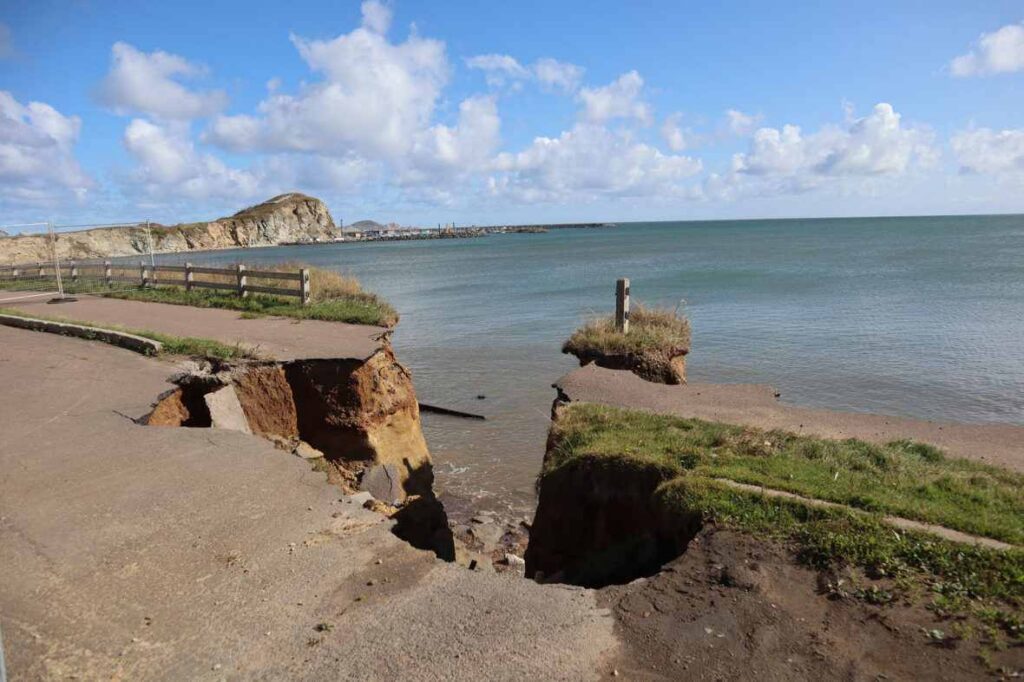
For coastal towns like the Magdalen Islands in Quebec, the effects of sea level rise reduces the safety and habitable area for people. As sea levels rise, waves reach higher on the coast, increasing the speed of erosion.
Changes in ocean patterns and temperatures can harm marine environments and the animals that live in them. Flip the tiles below to explore some of the effects of sea level rise on habitats, humans, and animals.
LET’S REFLECT…
Based on the environmental challenges you just explored, brainstorm some ideas to address the following:
- What are some ways we can slow or stop the causes of environmental degradation?
- How can we help mitigate the existing impacts on marine animals and plants?
- How can we help mitigate the existing impacts on coastal land animals whose habitats are being flooded?