
Let’s start off by learning how data visualization can help us to understand really big problems. Data visualization uses pictures, numbers, and graphs to help show a complex problem in a simple way.
Plastic was invented in 1907. For a really long time, it seemed like a really convenient invention that made it easier to make and distribute a lot of different products around the world.
But now, scientists have discovered that the chemicals used to make plastic don’t break down, dissolve, or decompose like natural materials do. That means it can take up to 500 years for a plastic bag to break down into tiny pieces of microplastics.
Every year, 8 million tons of mismanaged plastic waste ends up in the ocean. That’s enough to fill nearly sixteen garbage bags for every metre of coast in the world!
Data Dive – The Axes of a Chart
A bar chart uses either horizontal or vertical bars (columns) to show numerical data and compare it across different categories. One axis of the chart shows the specific categories being compared and the other axis represents numerical values.
- The other axis represents categories (often the x axis)
- One of the axis represents amounts (often the y axis)
Can You Predict What This Graph Is Showing?
See for yourself how data science and data visualization can help you understand plastic waste. What do you think the images below are trying to tell you?

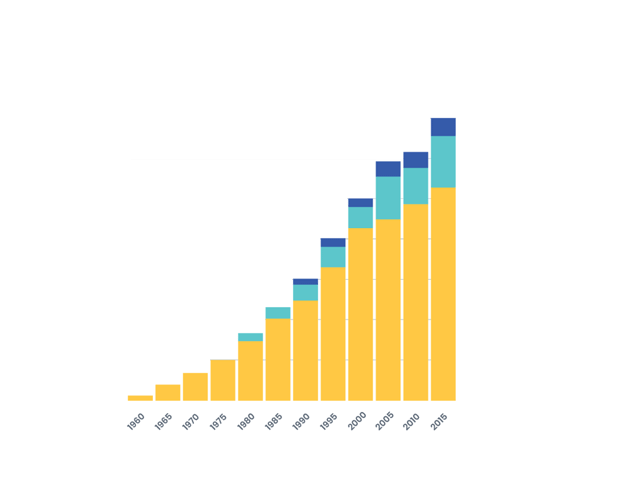
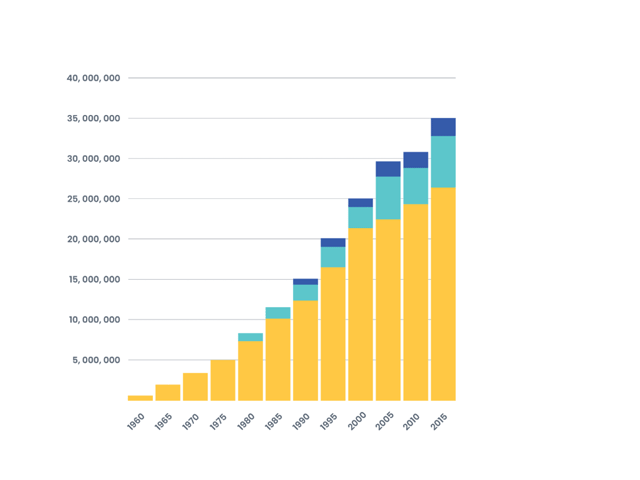

LET’S REFLECT…
Now that you’ve had a look at the graph, can you answer these questions?
- What did you notice about the amount of plastic waste over time?
- Where did the majority of managed plastic waste end up?
- From the total amount of managed plastic waste, how much was recycled from year to year?