
Some plastic might go to a recycling plant. Plastic that isn’t managed properly may end up in a landfill or it might be incinerated, which is bad for our air. But what about plastic that doesn’t end up in these places, like litter?
Of the mismanaged plastic that travels through rivers and into the ocean, 90% is carried by just 10 rivers across the world.
Quantitative data is data by the quantity. It can be counted, measured, and expressed using numbers such as weight by kilogram.
Qualitative data is high-quality descriptive information. Qualitative data can be categorized based on themes and characteristics, like kinds of plastics.
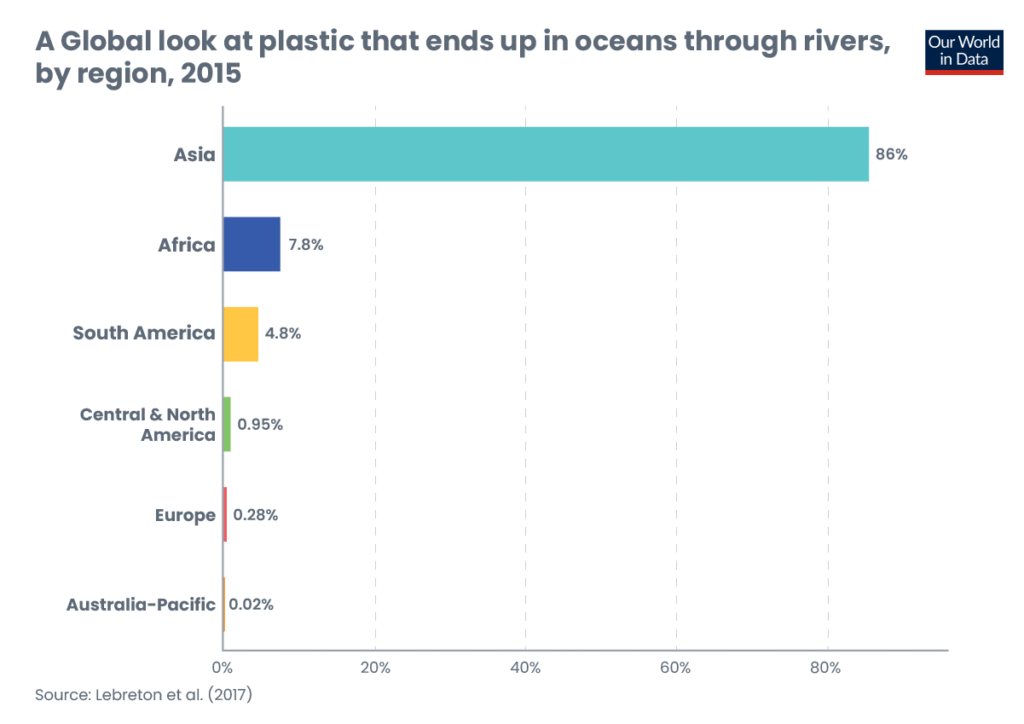
Source: Plastic Pollution by Hannah Ritchie and Max Roser
LET’S REFLECT…
Use the data visualized in this chart to reflect on these questions:
- General: Why does more waste end up in the ocean from some continents compared to others?
- Community: Have you noticed certain areas in your town that have more waste than other areas?
- Why do you think that is?
- Who is responsible for reducing this waste?
- Ethical: Asia is the continent with the largest and most densely-concentrated population in the world. Many essential household products are only available in single-use plastic packaging, while garbage trucks can’t access narrow streets to collect waste. Who is responsible for fixing this? Can you think of a solution?
- Who is responsible for fixing this?
- Can you think of a solution?